TrackMan 4 is the undisputed benchmark launch monitor: 26+ measured data points, dual-radar accuracy that the entire industry tests against, at $24,995 direct sale only. The TrackMan iO ($13,995) is the indoor-focused home option, though it carries a ~$1,100/yr software subscription after year one and does not measure attack angle. Both are built for professionals and facilities, not recreational home users.
- 26+ measured data points: full club and ball data
- Dual radar tracks club head and ball simultaneously
- Measured spin rate (not modeled): the industry reference standard
- Industry-standard simulator software (TM4: indoor + outdoor)
- Outdoor range mode up to 400 yards (TM4)
- Combine and competition modes for instruction
- Full data export and video integration
- The benchmark every other monitor is tested against
- TrackMan iO ($13,995): more attainable home indoor option
- TrackMan 4 = $24,995 direct sale only, not on Amazon
- TrackMan iO = $13,995 + ~$1,100/yr subscription after year one
- TrackMan iO does NOT measure attack angle (TM4 only)
- Weighs 6.7 lbs, not a portable range unit
- Requires dedicated space and reliable WiFi
- Complete overkill for recreational golfers
- Consumer monitors deliver 90-95% of the accuracy for a fraction of the cost
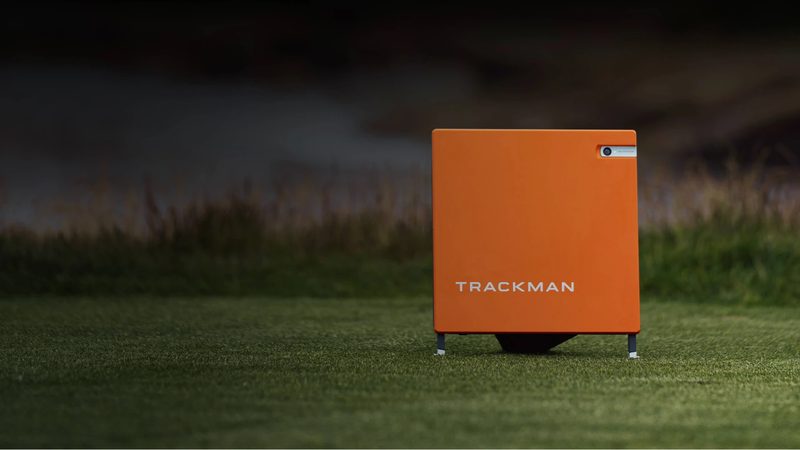
TrackMan 4 Specs
There are two current TrackMan models worth knowing about. The TrackMan 4 ($24,995) is the full professional flagship: dual Doppler radar, outdoor range mode up to 400 yards, the Tour standard and teaching benchmark. It works indoor and outdoor and is the unit used at PGA teaching facilities worldwide. The TrackMan iO ($13,995) is TrackMan's home-focused indoor monitor, using a hybrid OERT radar-plus-camera system. It's more attainable for serious home users, but comes with trade-offs: it's indoor-only, it does not measure attack angle (a metric available on TM4), and it requires a software subscription of approximately $1,100 per year after year one.
Both are sold direct by TrackMan. You will not find either model on Amazon. The flagship products page is at trackman.com. Factor that into price comparisons and any budget calculation.
The defining technical advantage of TrackMan's dual-radar architecture is what it measures versus what it models. Most launch monitors capture data at impact and then apply physics models to project ball flight. TrackMan tracks the actual ball through its complete flight path, from launch to apex to landing. That's why TrackMan data is used as the reference standard when manufacturers compare their own units, and why TrackMan accuracy figures hold up outdoors where photometric systems can struggle with lighting conditions and extended flight paths.
The iO's subscription cost deserves a clear callout. After the first year, keeping the iO software current and cloud-connected runs approximately $1,100 annually. That's a meaningful recurring cost that should be included in any total-ownership comparison against consumer alternatives.
Accuracy Testing
TrackMan's accuracy specifications are the most-cited benchmarks in the launch monitor industry, and the reason is straightforward: they're what every other manufacturer tests against when they market their own products. Published specs for the TrackMan 4 place club speed accuracy at ±0.5 mph and carry distance within ±1 yard under optimal conditions. These figures are consistent with what fitting facilities, PGA instructors, and independent equipment testers have reported across thousands of logged sessions worldwide.
The dual-radar architecture is the technical differentiator. Where most launch monitors capture impact data and model the remaining ball flight, TrackMan tracks the actual ball through its entire trajectory, from face contact to apex to landing. That full-flight tracking is especially valuable on curved shots and in outdoor conditions, where photometric-derived projections can diverge as ball path deviates from a straight line.
One area where Foresight-based units (like the Bushnell Launch Pro) have a genuine edge: impact data granularity. High-speed photometric cameras capture face angle, low point, and attack angle directly from images at the moment of contact. The TrackMan iO also combines radar with a camera for this reason, though notably, attack angle is only available on the TrackMan 4, not the iO. For the majority of instructors and fitters, the practical accuracy difference between TrackMan and a Foresight GC3-based unit is negligible. The price difference is not.
| Metric | TrackMan 4 | Foresight GC3 | Garmin R10 | Rapsodo MLM2Pro |
|---|---|---|---|---|
| Club Speed | ±0.5 mph | ±0.8 mph | ±1.5 mph | ±2.0 mph |
| Ball Speed | ±0.5 mph | ±0.5 mph | ±1.5 mph | ±1.5 mph |
| Carry Distance | ±1 yd | ±1 yd | ±3 yds | ±4 yds |
| Spin Rate | ±50 rpm | ±30 rpm | ±200 rpm | ±150 rpm |
Simulator Performance
TrackMan's simulator ecosystem is best-in-class. The platform natively supports E6 Connect, TGC2019, and FSX Play: three of the most widely used sim software packages in commercial facilities worldwide. More importantly, the integration is deep: TrackMan passes its full complement of 26+ measured data points to the simulator engine, allowing sim software to render ball flight with accuracy that consumer monitors simply can't match.
Indoor tracking is where the dual-radar architecture proves its value. Unlike radar-based consumer units that can struggle with short flight paths in confined spaces, TrackMan's dual-radar system acquires and tracks the ball almost instantly off the face. The result is minimal dropped shots and highly consistent indoor readings: a critical requirement for any commercial simulator facility where a dropped shot during a lesson or fitting session is a real problem.
The simulator software itself (TrackMan Performance Studio) is comprehensive: club fitting databases, combine assessments, competition modes, shot replay, and video overlay are all built in. For a PGA instructor running fitting sessions or lessons back-to-back, this is a complete workflow tool, not just a data capture device. The iO's ~$1,100/yr subscription (after year one) keeps the software and course libraries current. For commercial operators, that cost is trivially offset by revenue. For home users, it adds meaningfully to the total ownership figure.
Who TrackMan Is (and Isn't) For
TrackMan makes financial and practical sense for a narrow but well-defined group of buyers. PGA teaching professionals who run a high volume of lessons and want to provide quantifiable, repeatable feedback. Commercial club fitting centers where data credibility is a marketing differentiator and incorrect fit recommendations carry real reputational risk. Tour players and their coaches who need data that holds up under scrutiny. High-end golf facilities and practice centers that can amortize the cost across paying members and guests.
The common thread: these are buyers who generate revenue from the data. A teaching pro who charges $150/hour and runs sessions back-to-back can recover the TrackMan 4 cost over time. A home golfer who hits 5,000 balls a year cannot.
The TrackMan iO ($13,995) is aimed at serious home users who want TrackMan indoors, but even at that price, the trade-offs matter: indoor-only, no attack angle measurement, and a ~$1,100/yr subscription after year one. For most home simulator builds, consumer alternatives deliver 90-95% of the measurable accuracy at a fraction of the cost. The SkyTrak+ ($2,999) and Bushnell Launch Pro ($3,999) represent the point where diminishing returns become extremely steep. The remaining accuracy gap between those units and TrackMan will not improve your golf game. It will only improve your data.
If you're a serious home simulator enthusiast who wants the absolute best and cost is not a factor, TrackMan is peerless. But that is a genuinely rare buyer, and this review would be incomplete without saying so plainly.
Our Detailed Scores
The low scores on Portability and Value for Money aren't criticisms. They're accurate reflections of what TrackMan is. At 6.7 lbs with a WiFi requirement, it is not a portable range unit in the way a Garmin R10 or PRGR is. And at $24,995 (TM4) or $13,995 (iO) for a unit that delivers consumer-equivalent data on the metrics most golfers actually use: the value-for-money score is simply honest. The high scores on Accuracy, Data, and Simulator Quality are equally honest: in those categories, nothing currently competes.
Consumer Alternatives to TrackMan
For most golfers, the question isn't "which professional monitor should I buy". It's "how close to TrackMan can I get for a reasonable budget?" Here's what we recommend at each tier:
| If you want… | Consider | Price | Why |
|---|---|---|---|
| 90% of TrackMan accuracy at 1/6 the price | Bushnell Launch Pro | $3,999 | Foresight GC3 inside, photometric accuracy, same sim software |
| Best value for home simulator | SkyTrak+ | $2,999 | Great sim ecosystem, 90%+ accuracy for most metrics |
| Best radar monitor under $600 | Garmin R10 | $500 | 14 metrics, sim-ready, outdoor friendly, no subscription required |
| Ceiling-mounted professional alternative | Uneekor Eye Mini | $4,000 | Overhead photometric, no floor space needed, subscription-free |
TrackMan is sold direct at trackman.com: TrackMan 4 at around $24,995 and the iO at around $13,995. Check current pricing at trackman.com →
See our full SkyTrak+ vs TrackMan comparison if you're trying to decide between the two for a home simulator build. And if you're still unsure which category of monitor fits your situation, our testing methodology page explains how we evaluate accuracy claims across all the devices we've reviewed.
FAQ
Get Alerted When the Gear You Want Drops in Price
Hand-verified price checks on 20+ launch monitors and rangefinders. We only email when something meaningfully drops or a major sale hits. No daily deal spam. Free bonus: the golf distance cheat sheet, instantly.